
Sex Offender Checks in Pocahontas County
The Iowa Sex Offender Registry is the official statewide public source. Iowa DPS Division of Criminal Investigation maintains it, and local sheriffs register people subject to chapter 692A. The public system offers basic, advanced, map, phone or email ownership, recently updated, county statistics, and Most Wanted tools. Updates are typically posted hourly during weekday business hours.
The official basic search presents a neutral name and ZIP lookup.
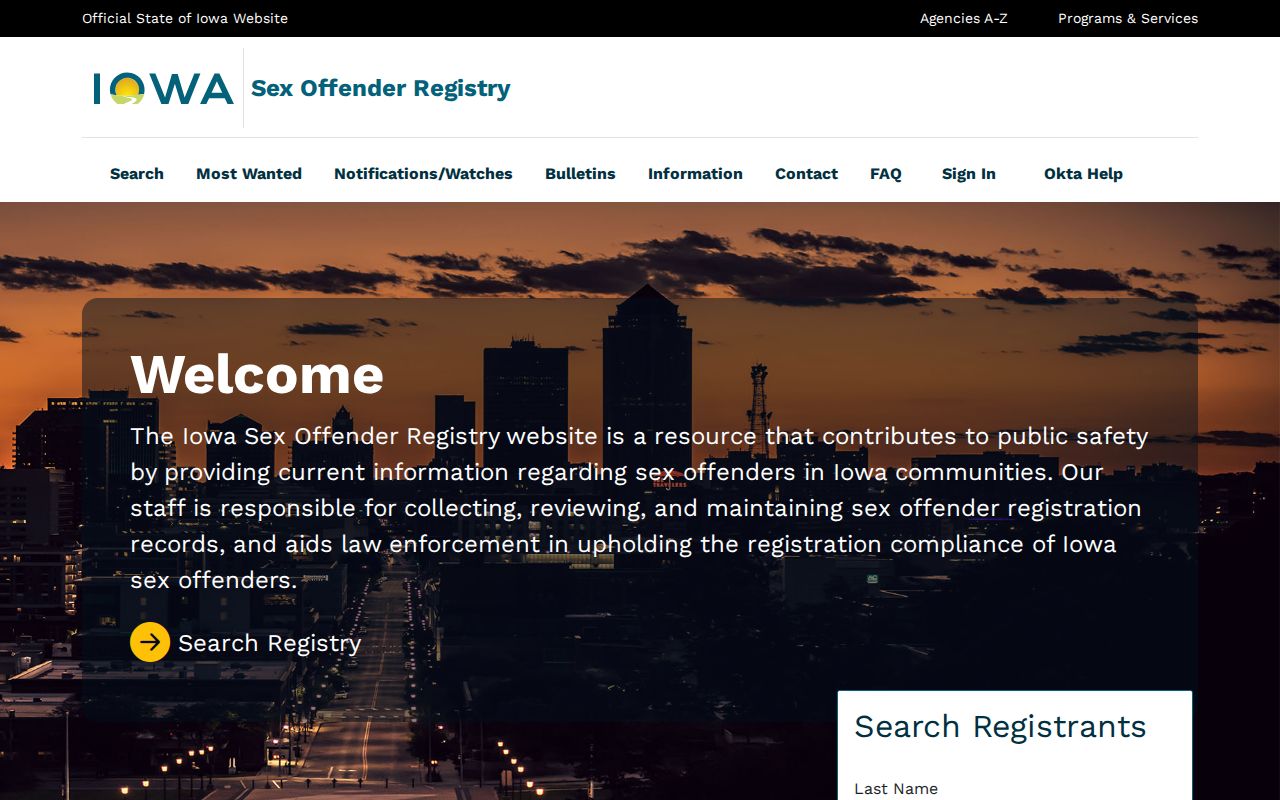
That source is the right first stop for a Pocahontas County name search, while location tools are better for awareness around a place.
Pocahontas County Offender Registration
People with a Pocahontas County registration duty report through the Sheriff's Office at 22 SE Court Street in Pocahontas. The office number is 712-335-3308. Iowa DOC handles registration before release from a correctional setting, and sheriffs forward registration data to DCI. This local-to-state flow explains why the sheriff is the place for registration compliance questions while the DCI website is the public search source.
Annual fees, civil penalties, out-of-state treatment, and modification rules come from current Iowa law. The research did not verify a local fee amount or payment method. Call the sheriff rather than relying on an old form or a third-party summary.
How to Search the Iowa Sex Offender Registry
A basic query accepts last name, first name, an alias option, and ZIP code. Advanced controls add identity and geography fields. A location search uses an address or coordinates plus a radius. Start broad enough to catch spelling or alias variation, then narrow the list and compare official profile details before deciding that a record refers to the intended person.
- Open the official Iowa registry and choose basic, advanced, or location search based on what is known.
- Enter a name, ZIP, city, county, or location radius. Use “Also Search Aliases” when name variation is possible.
- Review the result list and compare the OCI number, address, physical fields, and other identifiers.
- Open the official profile, check the last-changed date, and read conviction and status details in context.
The official Advanced Search shows the broader Pocahontas County registry controls.
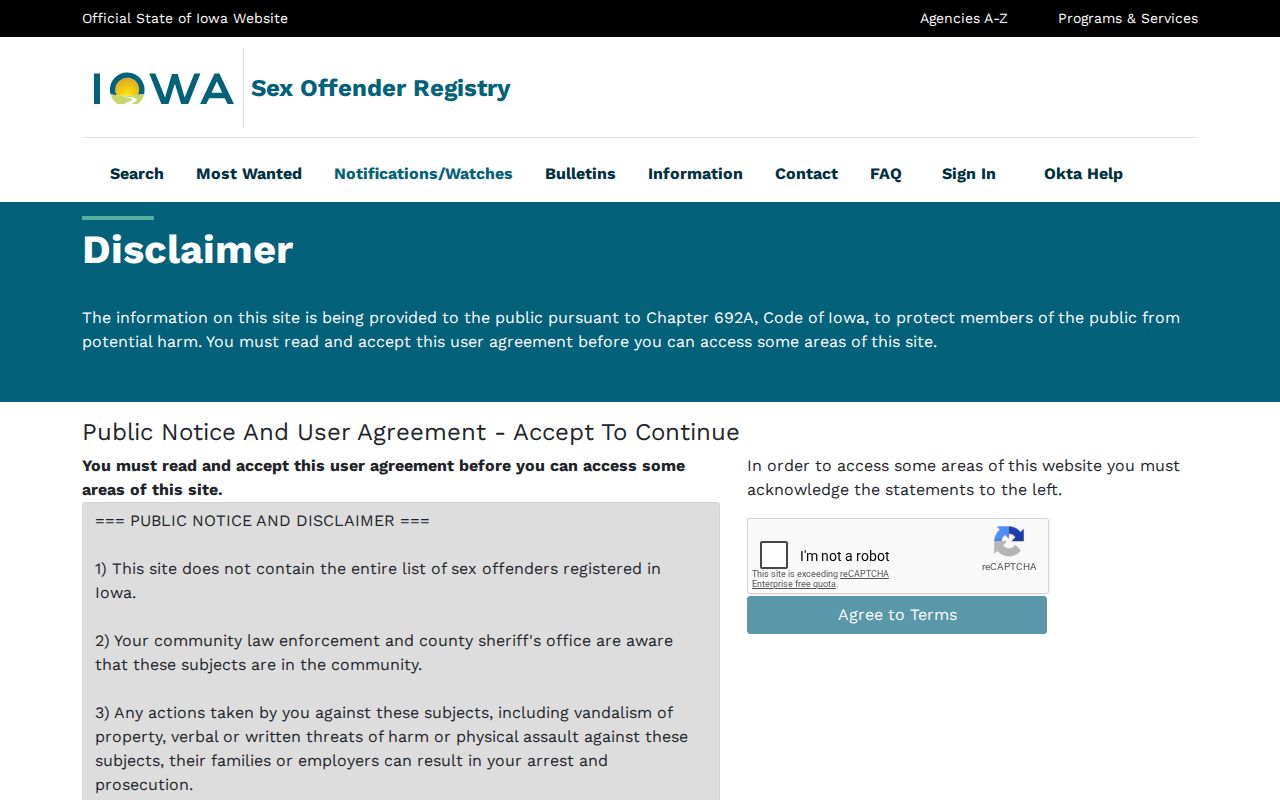
Advanced filters can reduce common-name errors, but a searcher should still compare more than one public identifier.
| Field | Type | Required | Notes |
|---|---|---|---|
| Last / First Name | Text | No | Starts-with search; aliases can be included |
| OCI Number | Text | No | Exact registry number |
| City / County / ZIP | Text or dropdown | No | Use Pocahontas County or a local place |
| Age / Height / Weight | Numeric | No | Uses documented tolerance ranges |
| Address and Radius | Location | For map path | Searches around a selected point |
| Most Wanted / Updated Since | Filter | No | Narrows wanted or recently changed data |
The official feed also supports paging and sorting by registry ID, OCI, name, or gender. When a result is narrowed to 25 or fewer records, documented output can include convictions, aliases, wanted status, and markings. Those technical controls help with accurate matching, but the public profile remains the clearest source for a person-specific review.
Pocahontas County Registry Address Watches
A free Okta account can create watches for an address, city, county, ZIP code, registrant, or saved group. The registry sends an email notice within 60 minutes of a change to registered information covered by the watch. That service differs from repeatedly running a static name search because it follows later updates.
Iowa does not require the sheriff or a police department to make a door-to-door notice solely because a registrant moves nearby. An address watch is therefore the direct opt-in notice channel. The alert signals changed registry data. It does not by itself explain the legal meaning of the change, so return to the current profile and local law enforcement source for context.
Registry updates are typically hourly on business days, not continuously at all hours. A watch notice may therefore follow the official update cycle rather than the instant an address change is reported. When timing affects a safety decision, verify the current public entry and call the sheriff with a focused question.
Inside a Registry Profile
Public Iowa profiles can display enough data to distinguish records and understand registration status. The official interface and API document identity, location, conviction, and update fields. They do not expose every item held by law enforcement. Section 692A.121 controls public availability and confidential exclusions.
| Name and Aliases | Lists the public identity forms tied to the registry entry. |
|---|---|
| Photo and Description | May show a photo, gender, height, weight, and skin markings. |
| Registered Location | May include primary address, county, ZIP, coordinates, and distance. |
| Conviction Fields | Can show convictions, age at offense, and victim age-group or gender categories. |
| Registry Identifiers | Includes registry ID or OCI number and address-cluster information. |
| Status and Update | May identify wanted status and the date information last changed. |
A tier, address, or profile date is one legal or administrative field. None should be turned into a claim about a person's present conduct.
Some fields are deliberately grouped rather than exposed as private narrative. Victim information, for example, may appear only as age-group or gender categories. Law-enforcement files can contain protected material beyond the public profile. The absence of that material is a legal boundary, not an invitation to seek it from unofficial databases.
Pocahontas County Registry Counts
The official registry statistics page supplies a county heat map and county-level context.
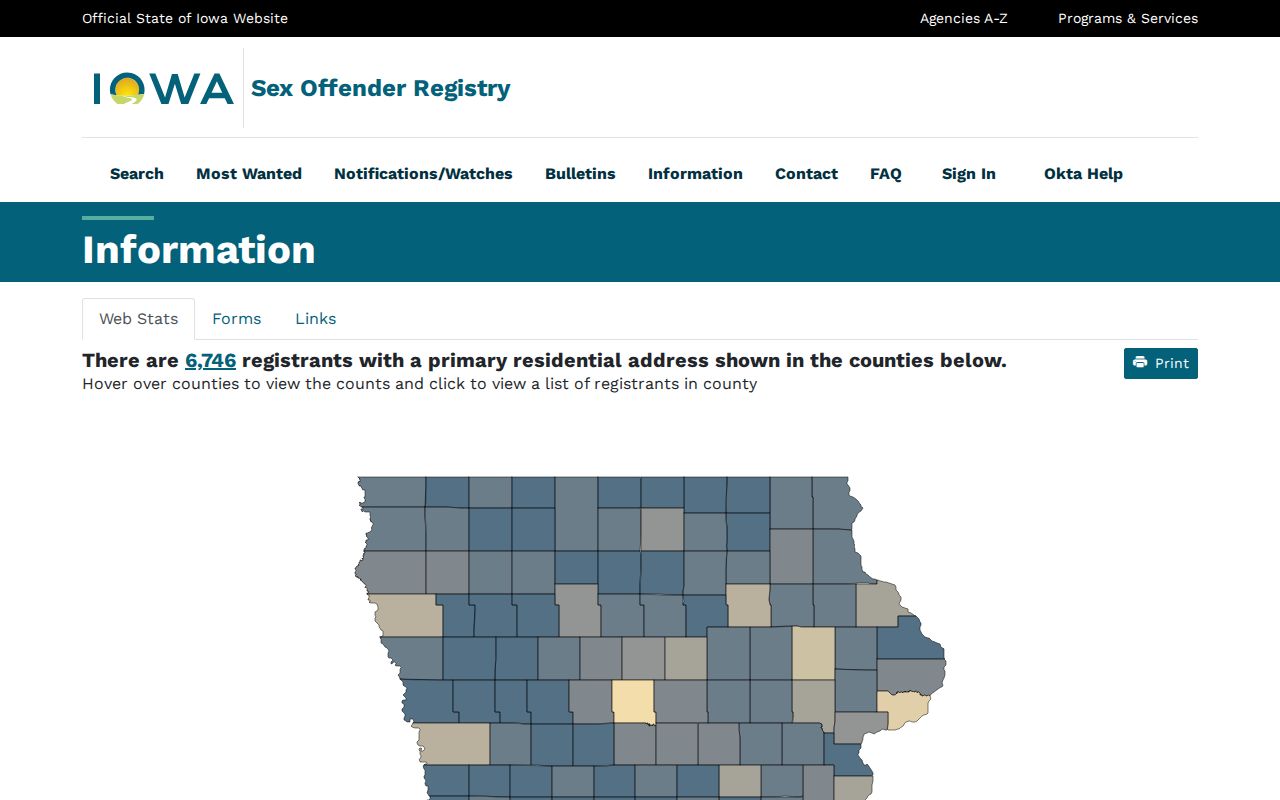
A map count should be read with its date and filters. It is not a crime rate, and it does not measure current incidents or personal risk.
Small changes can look large in a rural county. Registrations also follow statutory address and reporting rules, which differ from where an offense occurred. Use the heat map to choose a search area, not to rank a neighborhood or infer facts about a person who is not named in an official result.
Iowa Registration Levels and Requirements
Iowa assigns tiers and verification schedules under chapter 692A. Tier I registrants generally verify annually, Tier II every six months, and Tier III every three months. Duration is governed separately by section 692A.106. Iowa does not simply apply a federal-style 25-year term to every Tier II record, and lifetime registration does not follow from the Tier III label alone. Offense category, repeat or aggravated status, tolling, juvenile treatment, and other statutory facts matter.
| Tier | Duration framework | Verification |
|---|---|---|
| Tier I | General chapter 692A period is 10 years, subject to exceptions | Generally annual |
| Tier II | Apply section 692A.106 to the offense and status; not an automatic 25 years | Generally every six months |
| Tier III | Lifetime applies to listed aggravated, repeat, and other statutory categories | Generally every three months |
Use the current Iowa Code chapter 692A for exceptions, tolling, presence restrictions, and modification rules. A public tier label is not a personalized risk score.
Sections 692A.113 and 692A.114 govern Iowa exclusion zones, residency rules, and presence restrictions. They apply by statutory category and circumstance, not merely because a profile appears in a ZIP-code result. Questions about a particular duty should go to the Pocahontas County sheriff or qualified legal counsel, not be inferred from the map.
Pocahontas County and National Search
The Iowa registry is best for state fields, local watches, and Iowa-specific update tools. The National Sex Offender Public Website searches participating jurisdictions across state, territorial, and tribal systems.
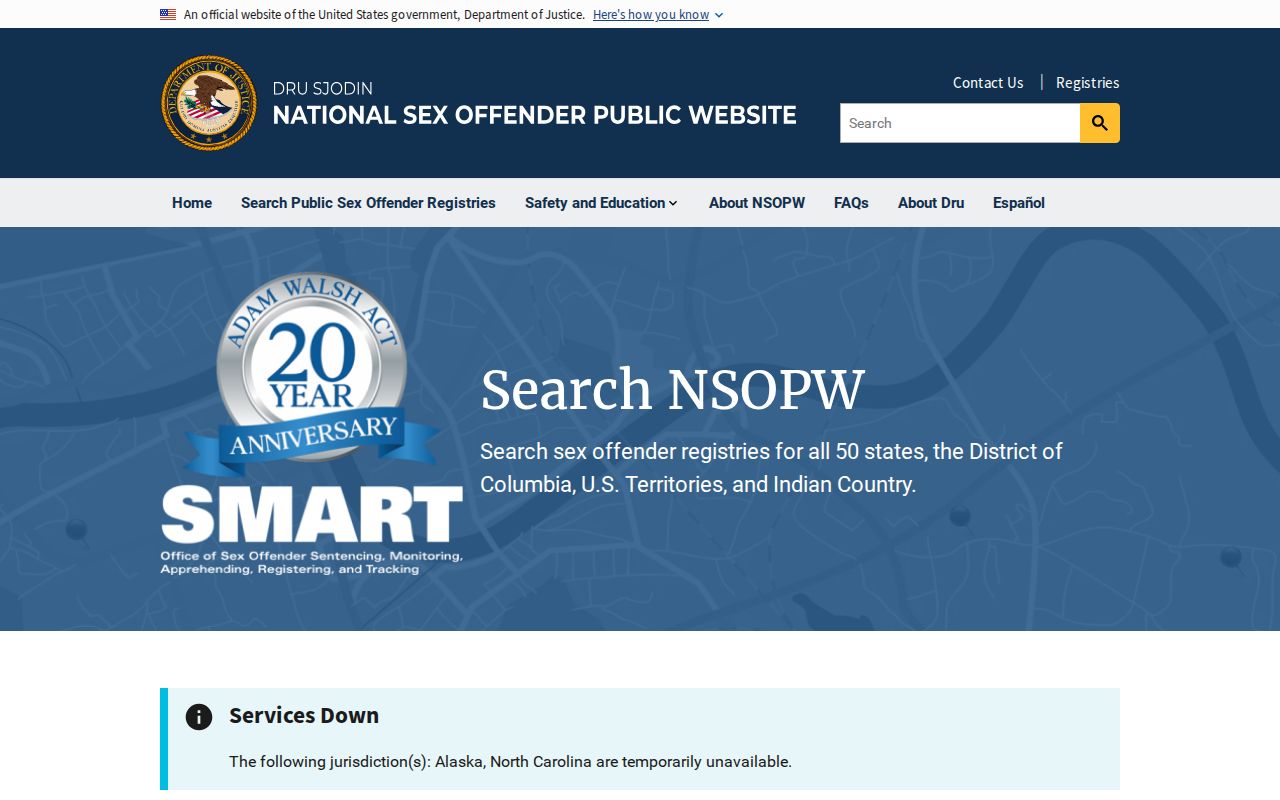
NSOPW adds a cross-state layer when a search involves more than Iowa, but the originating registry remains the best source for current local profile details.
Neither channel should be treated as a general criminal-history database. Registry inclusion is based on registration law, while other convictions may appear only in court, DCI, or corrections records. Use each system for the question it was built to answer.
A no-result response can also reflect the scope of the chosen jurisdiction or search terms. Check aliases and nearby ZIP codes, then use NSOPW when another state may hold the registration. Do not fill a gap with an unofficial people-search service.
Pocahontas County Registry Noncompliance
Suspected noncompliance should go to the local sheriff or the registry contact at 515-725-6050. Provide the specific public profile, observed fact, and time without confronting the person. Law enforcement can compare the report with information that is not public and decide whether follow-up is warranted.
The registry also provides a Most Wanted search for people sought by authorities. Its official warning is direct: do not try to apprehend anyone. The Most Wanted search form is built for reporting leads to authorities.
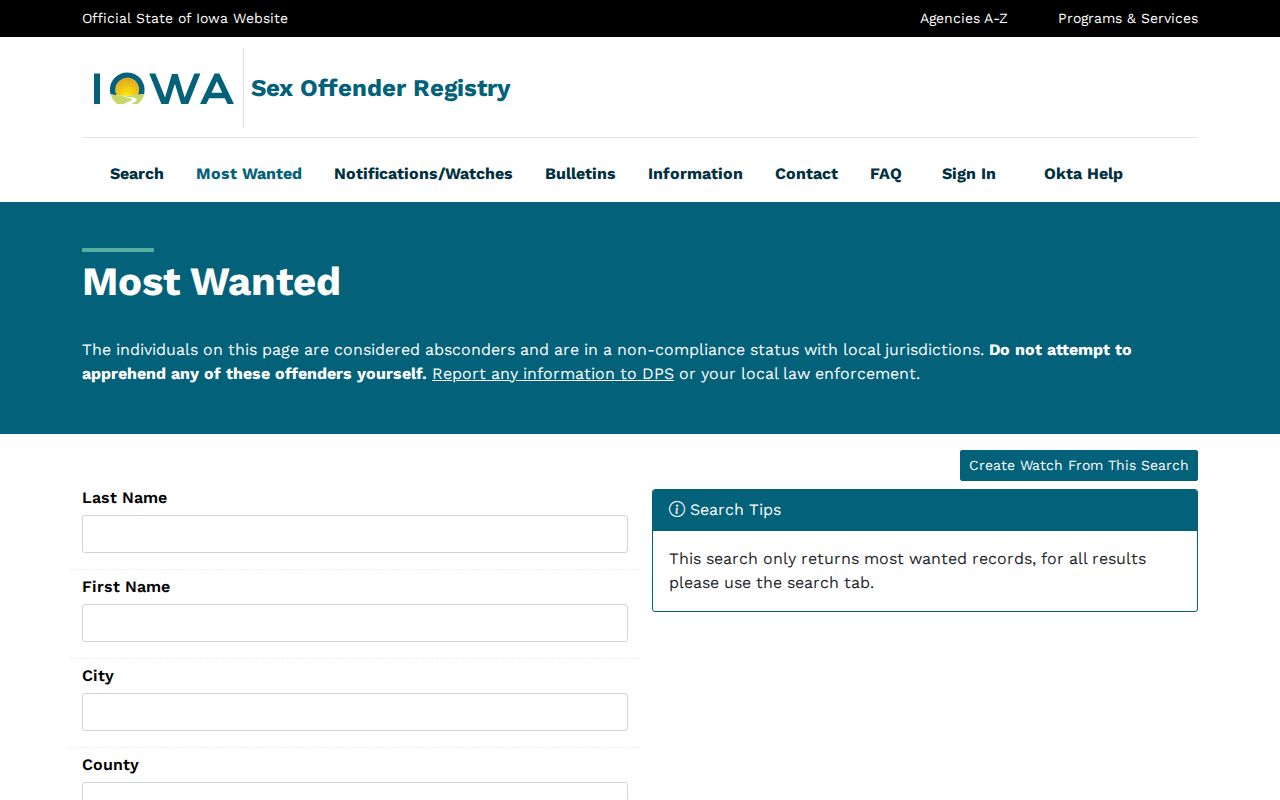
Wanted status is an urgent law-enforcement matter, not permission for personal contact, surveillance, or public accusation.
Community Notification and Lawful Use
Registry information supports awareness and practical safety planning. Check the official profile, note the update time, and use address watches for later changes. Questions about a local registration record belong with the Pocahontas County sheriff. Reports of a wanted person or suspected violation belong with law enforcement. Public data should never be used to threaten, shame, track, or organize action against a registrant or household.
Statutory misuse alert: Iowa Code §692A.121 governs public registry information. Harassment, threats, intimidation, vigilantism, discrimination, or misuse of registry data can be a crime and should be reported to law enforcement.
Public and confidential boundaries exist for safety and due process. A responsible Pocahontas County search stays within the official tools, verifies current data, and leaves enforcement to the sheriff and Iowa DPS.
When sharing safety information with family members, link to the current official profile instead of copying an old screenshot or adding claims. The registry's last-changed field and live status give later readers a way to verify the record. If the official entry changes, an address watch can supply a timely notice without public confrontation.